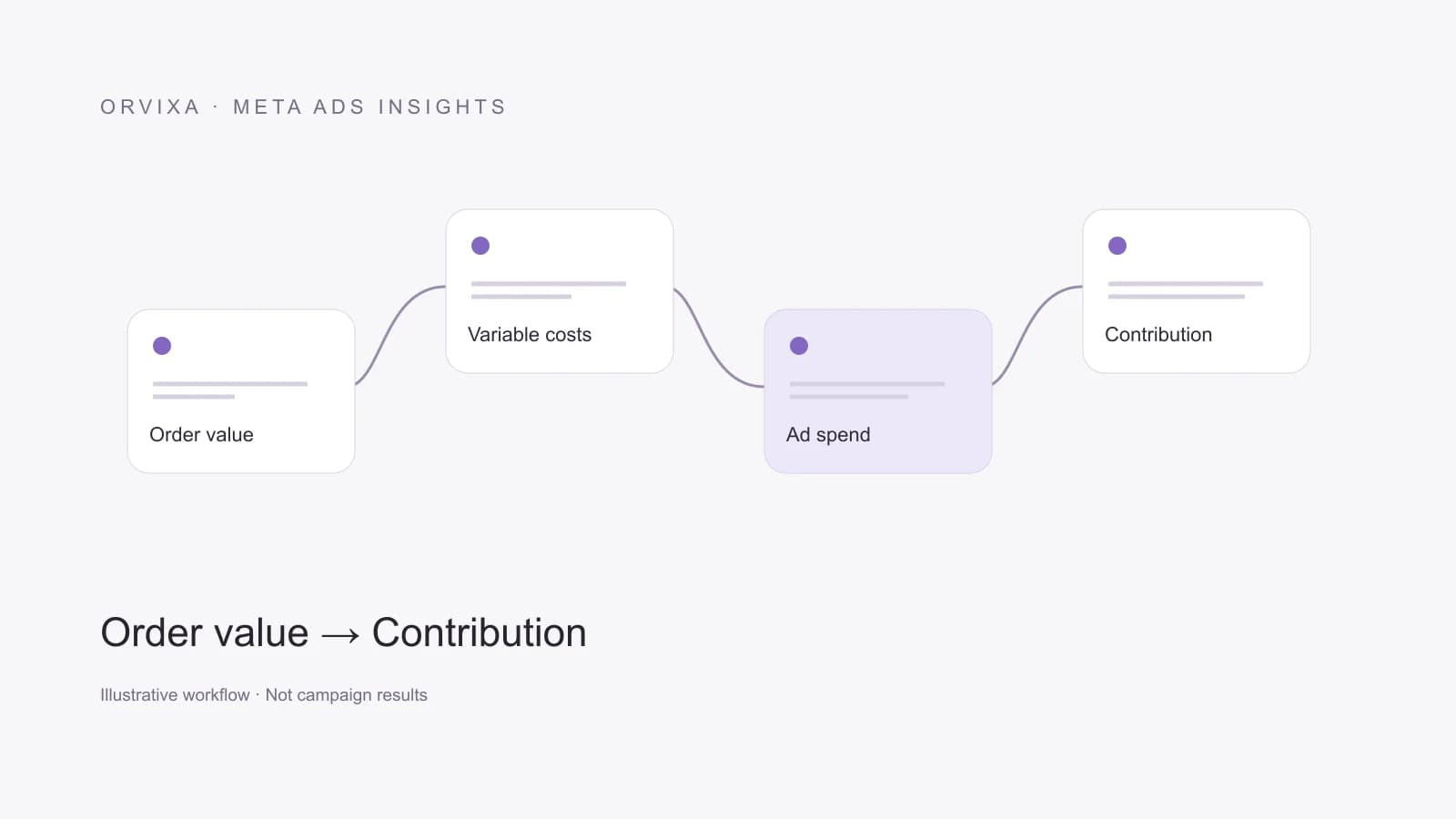
Revenue is not the same as profit
A large attributed sales figure can look impressive in an ecommerce Meta account. It does not, by itself, establish that the campaign is sustainable. Product cost, shipping, payment fees and returns change what remains from an order. Reading revenue as earnings is particularly misleading during promotions. Commercial evaluation needs the business cost structure alongside the advertising dashboard.
ROAS describes a relationship between attributed revenue and advertising spend. It does not automatically include every business expense. The same ratio can produce very different outcomes for products with different margins. When reviewing ecommerce advertising with Orvixa, clarify which revenue is counted, how returns are treated and which costs are excluded. Your own economics are more relevant than an arbitrary universal target.
Select products with operational context
The best-selling item is not always the best advertising starting point. A low contribution margin, frequent returns or unreliable stock can reduce the value of additional demand. Consider fulfilment and customer experience as well as popularity. The business needs to handle the orders if a campaign works. Clearing excess inventory is also a different objective from acquiring customers who are likely to buy again.
More traffic can amplify a weak product page. Answer questions about dimensions, usage, delivery and compatibility before increasing spend. Related products may help build a useful basket, but bundles should not create confusion or pressure. Review the effect of changes on returns and satisfaction as well as order value. Focusing only on the amount paid at checkout can hide problems that appear later.
Separate new and returning customers
A first purchase and a repeat order do not represent the same acquisition journey. Use repeat purchase evidence when it exists, but do not treat future revenue as certain. Ambitious lifetime-value assumptions can make a new store’s budget unnecessarily risky. Build a starting point from completed, comparable transactions before relying on a forecast about how often customers will return.
Advertising reports and store records may show different numbers. Investigate windows, definitions and data methods. Attributing a sale to a channel is different from proving that the channel created demand that would otherwise not exist. This distinction matters when deciding how much to invest. Business transactions, technical measurement and platform data should inform the discussion together rather than allowing one dashboard to define the whole outcome.
Evaluate promotions on their full effect
A discount can increase conversion while reducing contribution. More orders do not always mean more profit. When comparing a promotional period with a regular one, include changes in margin, delivery costs and campaign production. Communicate genuine terms clearly instead of using invented previous prices or permanent urgency. The expectation created by the advertisement should match what the customer receives after ordering.
Check stock and support capacity before a busy period. Delayed delivery or unanswered enquiries can affect the business beyond the current campaign. Keeping the advertising team informed of stock changes is a simple but important process. Treating performance as the responsibility of media buying alone makes operations invisible. Sustainable growth requires the store and the campaign team to act on shared information.
Make the next decision explicit
A review should identify which products keep receiving budget and which pages need work. Record the assumptions behind the choice. A handful of orders is not enough to support a sweeping conclusion, and limited evidence should be described honestly. Before a major increase in spend, check that measurement is consistent and that the reported orders were actually completed. Otherwise the business may scale an incorrect signal.
A useful ecommerce report does more than celebrate sales. It explains profitability boundaries, operational constraints and the next creative or website requirement. Orvixa connects product presentation and the store experience with media decisions. With a clearer cost model, the discussion becomes more useful: what should grow, what needs to change and what should stop? That is a stronger basis for investment than revenue alone.
Practical exercise
Choose three products and list each one’s selling price, variable costs and contribution before advertising. Compare their advertising results to see why equal sales revenue may not generate equal profit. Mark the first report as provisional when return data arrives later, and update it afterwards. Clarify stock responsibilities with the store team and campaign change notifications with the advertising team. This exercise identifies information needed for advertising decisions and does not replace accounting advice. Turning ads off is not the only option when a product appears unprofitable. Presentation, cost or the offer can change, but the commercial outcome of each change must be recalculated. Aim for explainable decisions rather than automatic scaling.